
Top Things To Do in Copenhagen, Denmark
Are you planning a visit to Copenhagen? Read on to learn all the best things to do in the capital of Denmark!
I just returned from Copenhagen, and I absolutely loved it. I didn’t know what to expect, since I had never been to Denmark before, but wow!
Here are my top recommendations for things to do in Copenhagen. And the best part about it? All of these things are free if you have the Copenhagen Card.

This post may contain affiliate links and I may receive a commission, at no extra cost to you, if you make a purchase through a link. Please see my disclosures.
Epic Things To Do in Copenhagen
Visit Rosenborg Castle
Rosenborg Castle was built as a pleasure residence by Christian IV, one of Denmark’s most powerful kings, in the early 17th century. Today you can enter and admire the eclectic combination of rooms, decorations, and artefacts.
My favorite was the Great Hall, which contains the Danish coronation thrones (no longer used) and three large silver lions dating to the 17th century. These lions leave Rosenborg when a king or queen dies to stand guard over their coffin.


Make sure you descend to the basement to see the regalia and Crown Jewels of the Danish royal family. And then head outside to stroll around the grounds and the nearby King’s Garden (just across the moat).
Rosenborg isn’t dazzling like Christiansborg – it’s a castle, not a palace. But it’s historic value and beautiful setting combine to produce a great effect.
PRO TIP: The King’s Garden, which is right next to Rosenborg, is free to enter. It’s a popular place for locals to hang out and it was a lovely surprise for us.
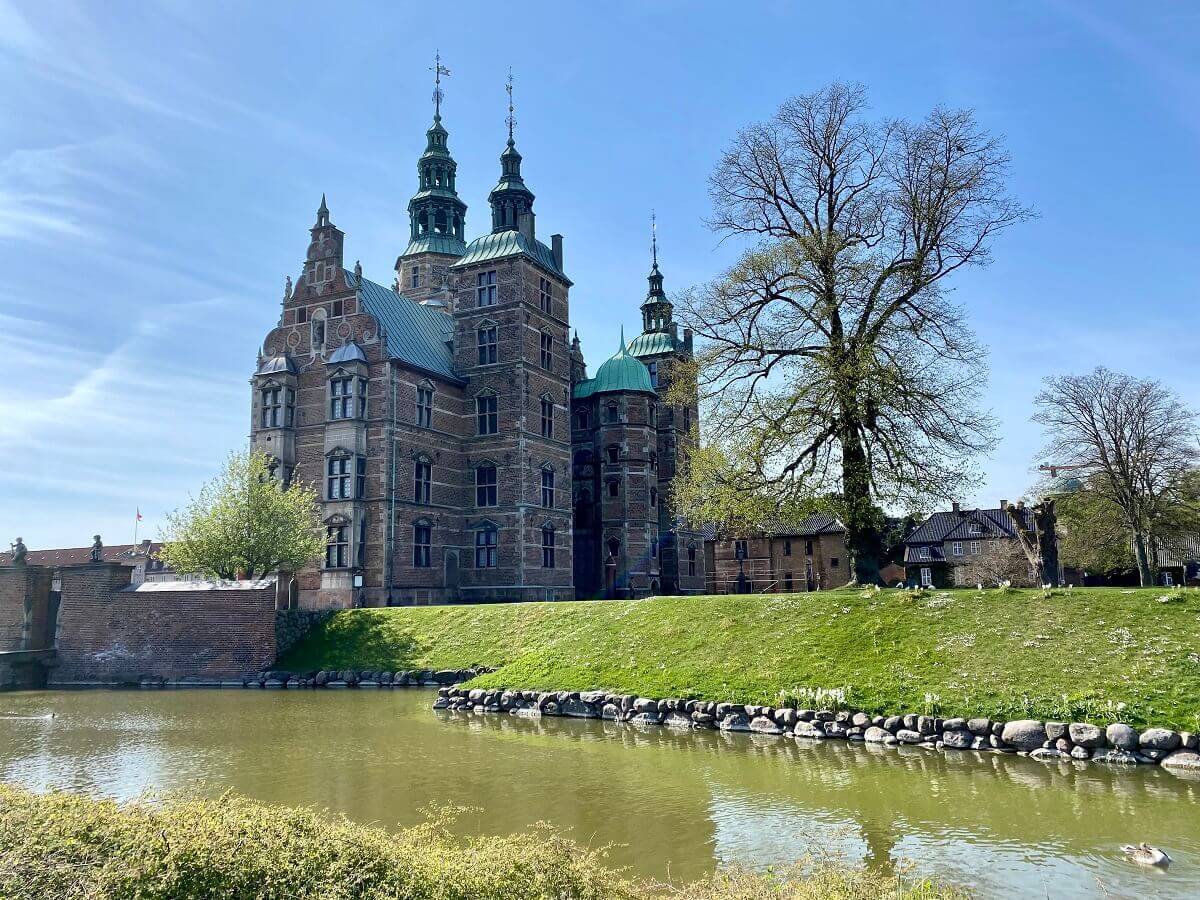
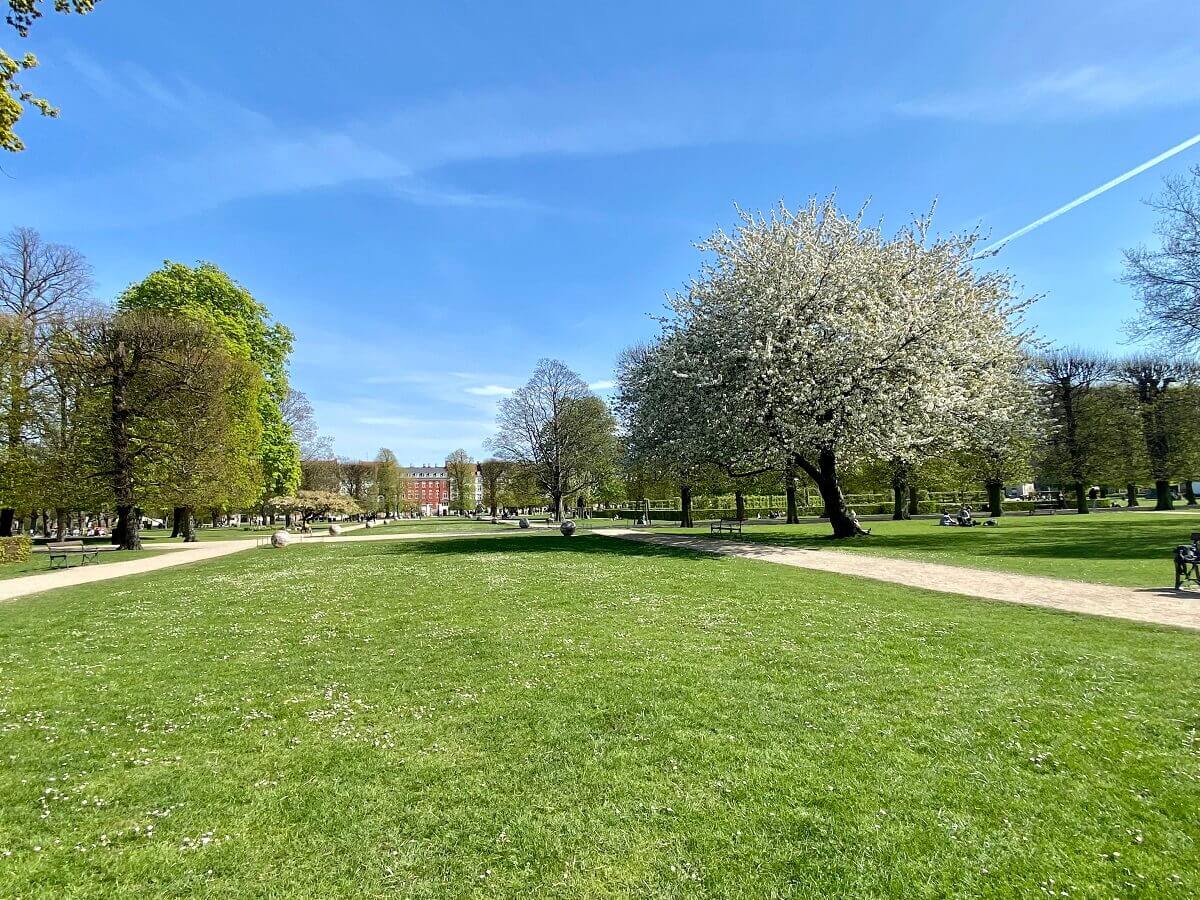
Find out more about Rosenborg here
Visit Christiansborg Palace
Christiansborg Palace is the center of Danish government. Today the queen has her offices there, as does the prime minister. The parliament and the Supreme Court also meet in a wing of the palace. So all three branches of government – executive, legislative, and judicial – operate from the same building.
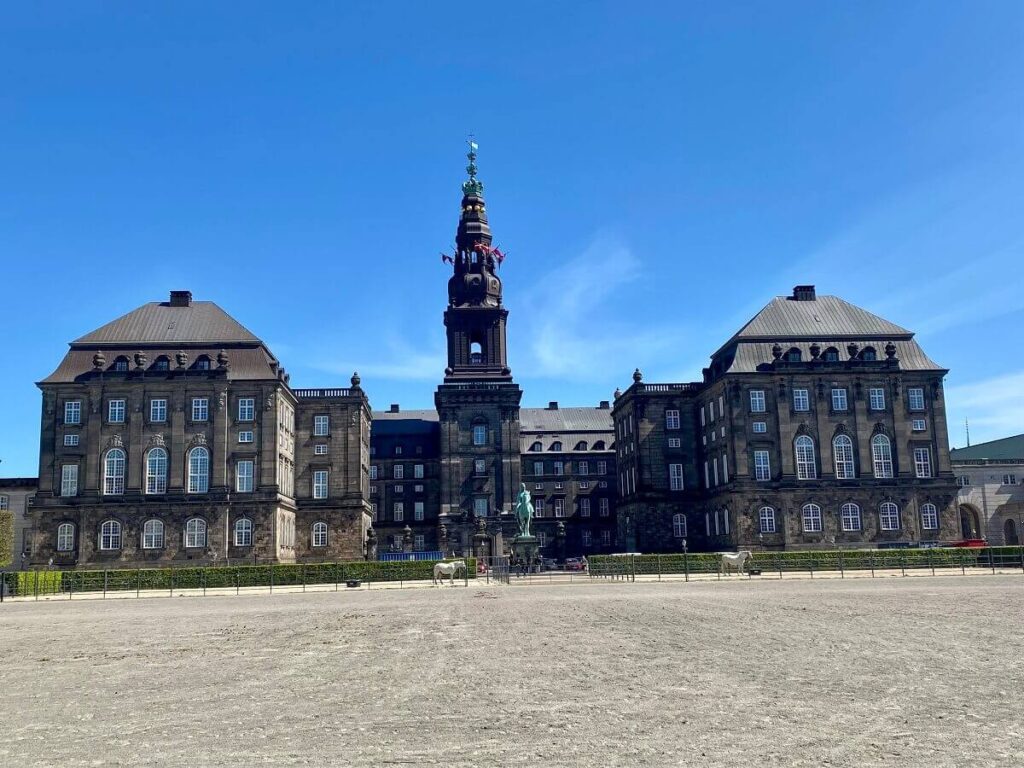
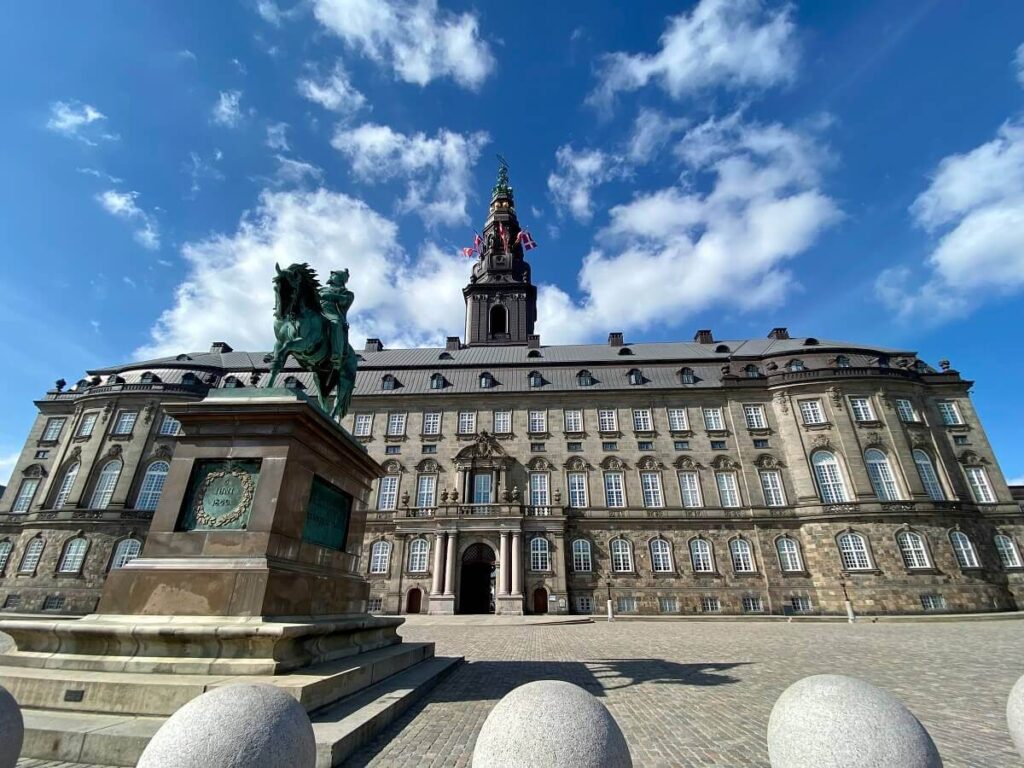
The first Christiansborg – “Christian’s castle” – was built in the 1720s by Christian VI as a royal residence. The palace has burned twice in the centuries since, but each time it was rebuilt.
Today you can enter the Royal Reception Rooms and admire Queen Margrethe II’s throne and the beautiful banquet hall. The decorations are gorgeous – red velvet hangings, dazzling chandeliers, and more.
You can also visit the Royal Kitchen and the Royal Stables. We strolled into the stables and said hi to some royal horses – very fun!
The last area open to the public is the Ruins under Christiansborg Palace. Previous castles had stood on the spot since 1167. You can see many original stones and interpretive signs explain the history of the location.
But beware: there is currently a monsters exhibit there as well, and the monsters make creepy and potentially triggering noises. Avoid the ruins if this will disturb you.
Quick tips: Guided tours of the parliament are available in English on Saturdays, but otherwise you cannot enter the parliament building. The chapel and the tower were also closed when we visited. But the Royal Reception Rooms are more than enough to justify a visit!
Find out more about Christiansborg here
Climb the Round Tower
The Round Tower (Rundetaarn) rises up in the Old Town and provides a helpful landmark. Christian IV built the tower in the 1600s as an observatory. And he himself was responsible for the rebus (or puzzle) depicted on the front of the tower.
Later a library and a church were attached to the tower to form the Trinity Complex, which became the center of Danish astronomical research. To this day scientists watch the stars from the top of the tower during the winter.
Now climbing the tower is one of the most popular things to do in Copenhagen. Climb up the spiral ramp and then ascend a short spiral staircase to reach the viewing platform.
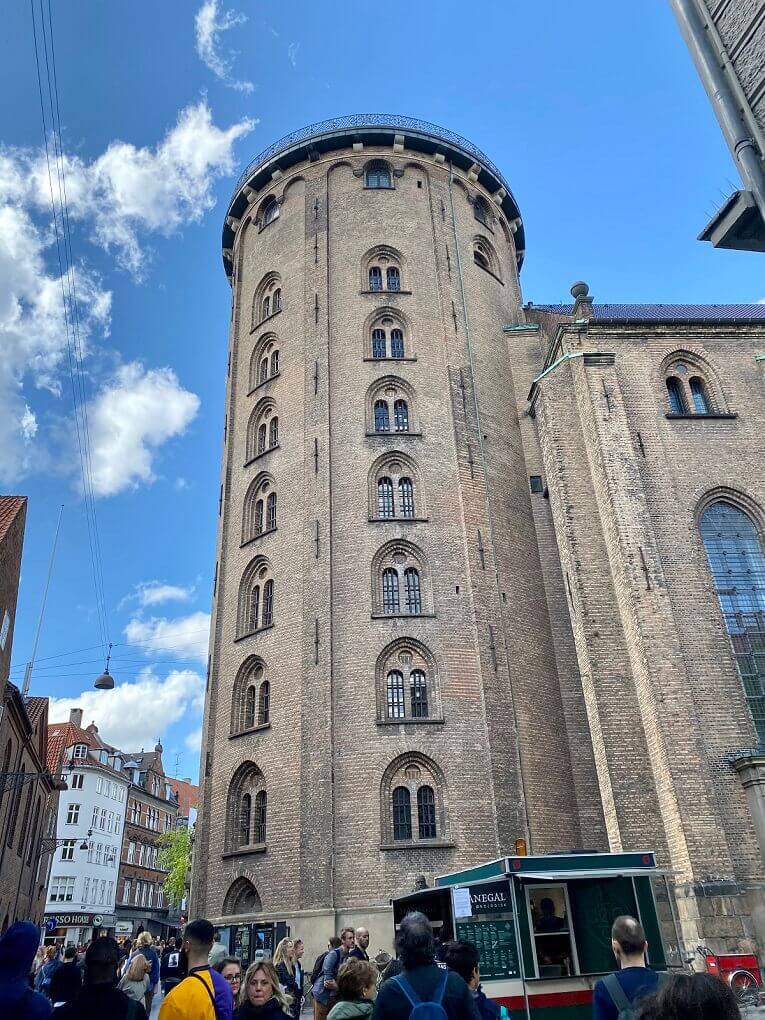


On the way, you can peek into the tower’s hollow core. A thick sheet of glass now covers the hole – you can stand on it if you dare.
The main attraction is the panoramic view from the top. See if you can spot Christiansborg Palace and other places you have visited!
Quick Tips: there are no elevators, so you do need to walk up the entire way. However – as someone who has climbed a LOT of towers – I will say that the sloping floor makes things much easier. Note, however, that there is a short spiral staircase at the very top to get to the viewing platform.
Learn more about the Round Tower
Explore Tivoli Gardens
If you hear screams when you are wandering around Copenhagen, don’t worry: it’s just people having fun at Tivoli Gardens. Tivoli is one of the oldest amusement parks in the world and it has been delighting locals and visitors since 1843.
Even if you don’t like roller coasters, head inside to enjoy the lively atmosphere and admire the beautiful landscaping, decorations, and architecture. There are also restaurants, shops, concerts, pantomime shows, and more. In the evening, lights turn on everywhere to create a lovely experience.
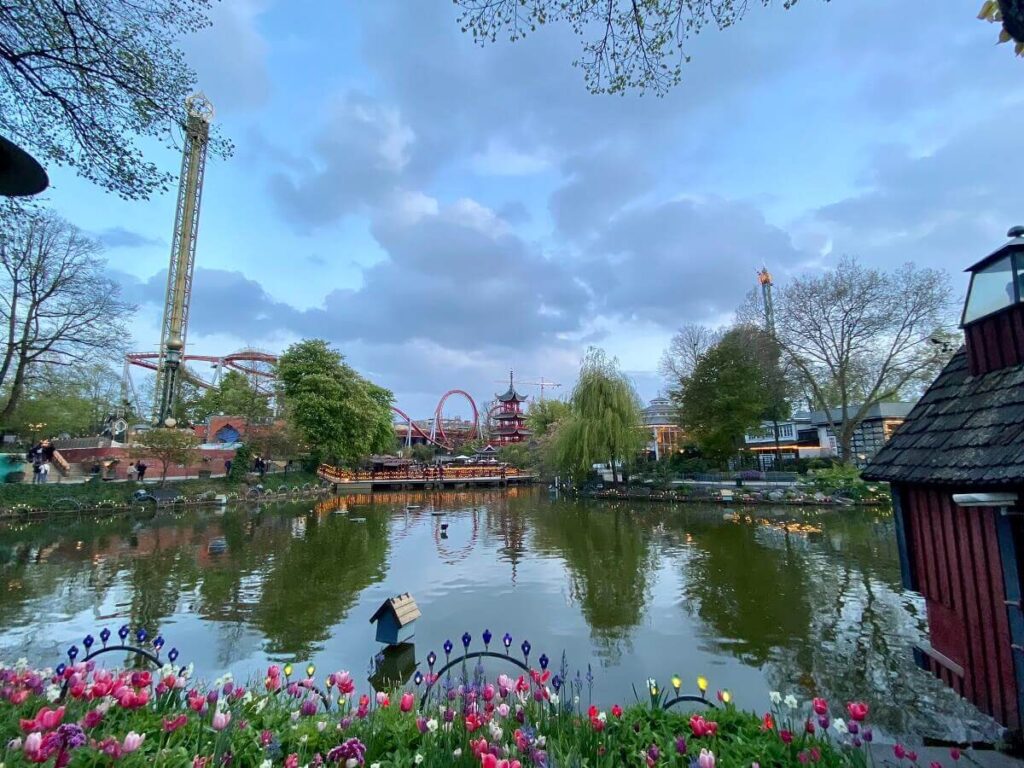
The rides range from extreme roller coasters like Dæmonen (so awesome!) to child-friendly carousels and boats. My friend and I headed for all the adrenaline-inducing experiences: I think Aquila was my favorite, since we were constantly upside down. And the Star Flyer – a swing carousel 80 meters high – gave us an amazing view of Copenhagen.
Quick tips: Entrance to Tivoli is included in the Copenhagen Card, but rides are not. If you want to experience the attractions, I recommend buying the all-access ride pass at one of the kiosks. You can store your bags in a locker for a small fee so you don’t have to leave them in the unguarded cubby holes next to the individual rides.
Practical info: Tivoli is open seasonally – for summer, Halloween, and Christmas – so check to make sure it is operating during your visit. Learn more about the park here.
Take photos with the Little Mermaid
The Little Mermaid has sat on the rocks in the Copenhagen harbor since 1913. Danish brewer Carl Jacobsen commissioned the statue and donated it to the city after seeing a ballet based on Hans Christian Andersen’s fairytale.
The Little Mermaid is located beside the Langelinie Promenade, a popular spot to walk. We took the mandatory touristy photos and then sat on the rocks for a while to enjoy the calm and the view. Waves lapped softly and the harbor spread out before us. Occasionally a tour boat would come by to take photos.

I definitely recommend seeing the Little Mermaid on foot; it was a nice interlude. We also saw her from the water on our canal tour (see below), but she merits a dedicated visit.
Quick tips: the Little Mermaid is about a 30-minute walk from central Copenhagen, so it is a bit out of the way. There are free public restrooms nearby, in Langelinie Park. Head toward the Ivar Huitfeldt Column (the tall winged statue on a pillar) and you will find them.
Østerport metro station is the nearest at 15 min walk away.
Take a boat tour on the Copenhagen canals
Stromma operates canal tours from two points in Copenhagen: Ved Stranden (across from Christiansborg Palace) and Nyhavn. These 50-minute tours guide you around the canals and harbor of Copenhagen and help you to see the city from a new perspective.
We went on our last day in Copenhagen and it was fun to spot places we had been and to fill in gaps in our knowledge of the city. Plus you can get great photos from the open boats!


Quick tips: The canal tour is included in the Copenhagen Card, but ONLY if you board at Ved Stranden. You need to go to the Stromma ticket desk, show them your card, and receive a free paper ticket.
On weekends and during high tourist season boats fill up fast, so I recommend heading over in the morning to pick up tickets if you are on a tight schedule. You can book them for any available tour that day.
Canal tours run year-round, but hours vary. Boats are closed and heated in the winter. For more information, visit Stromma’s website.
Discover Danish history at the National Museum
The National Museum is a must for history and archaeology lovers. The multiple floors tell the story of Danish history (and more).
You could spend a whole day here, but we popped in for two hours to learn about prehistoric Denmark and the Vikings. I loved the exhibitions on the first floor; from giant elk skeletons to the belongings of the earliest Danes, I was fascinated.

The marshy conditions in Denmark have preserved artifacts to an impressive degree – clothes, wooden tools, instruments, ships, even hair have survived the millennia.

There was also a cool Viking exhibition when we visited. But overall prehistoric Denmark was my favorite! You can read more about the National Museum here.
Eat smørrebrød for lunch
One of Denmark’s iconic dishes is smørrebrød, an open-faced sandwich. Literally the name means “butter-bread”, but there is a lot more than butter on there.
I had my first smørrebrød at Restaurant 1733 near Christiansborg Palace. There are all different kinds of sandwich (including vegetarian options).
I chose the “creamy chicken salad” – chicken salad, bacon, and greens piled on top of a slice of bread. Delicious!

Visit Nyhavn
Nyhavn began as a seedy street for sailors to hang out, but now it is popular for both tourists and locals to eat here. The colorful buildings along the canal make this a great spot to take photos.
Be sure to look for houses No. 20, 18, and 67. The author Hans Christian Andersen lived in all of them during his time in Copenhagen. In fact, he wrote some of his most famous fairytales in Nyhavn.


Window shop on Strøget street
All the best brands have stores on Strøget, the height of Copenhagen fine shopping (and shopping of any sort). We didn’t buy anything, but it was fun to wander around and appreciate the bustling excitement.
There are also lots of cute cafes where you can stop for a snack.
Visit Amalienborg Palace
Amalienborg is the royal residence in Copenhagen. It is actually a group of four palaces around a single courtyard.
The royal family moved into Amalienborg in 1798 after the first fire at Christiansborg, and they haven’t looked back! You can visit at 12:00 for a changing of the guards.
We weren’t able to make it to Amalienborg, but it’s high on my list of things to do if I return to Copenhagen. Learn more about Amalienborg Palace here.
Take a day trip
Copenhagen has plenty to occupy you for days, but it is also an excellent base for day trips around Denmark (especially the island of Zealand).
Here are some top choices:
- Visit Kronborg Castle, home of Hamlet, at Helsingør
- Ride a Viking ship at Roskilde
- Visit Odense, home of Hans Christian Andersen
Is Copenhagen worth visiting?
My opinion on this matter should be clear by now. Yes, Copenhagen is absolutely worth a visit.
The city has historical sites, beautiful public parks, and a relaxed, happy vibe. It is true that Denmark can be a bit expensive, but the Copenhagen Card is such a good deal and it really helps you to keep expenses to a minimum.
If you have the Copenhagen Card, you only need to worry about meals and souvenirs.
How to get to Copenhagen
Your easiest bet, if you are coming from further away, is to fly into Copenhagen Airport. That’s what we did, and it was very convenient. You can hop on a metro and be in Copenhagen Central Station in 20 minutes.
Another option is to arrive by train. If you’re coming from Stockholm or elsewhere in southern Sweden, this may be most convenient. My friend and I did this in reverse – we took a 5-hour train from Copenhagen to Stockholm.
Where to stay in Copenhagen
I recommend that you look up accommodations on Booking.com. That’s what we did, and Booking has never failed me yet.
We stayed at ProfilHotels Richmond, which is about a 10-minute walk from Copenhagen Central Station. This location was excellent, and the hotel breakfast was amazing, as was the service. Our main complaints were that the wi-fi really only worked in the lobby and the room was tiny.
Since we didn’t spend much time in the hotel, and since there is free public wi-fi in many places in Copenhagen, it served our purposes. But there are a variety of options on Booking.
Plan Your Trip to Copenhagen
Are you excited about visiting Copenhagen now? You should be! This city packs so many historical and cultural sights into a very walkable distance.
I’ve said this before, but I want to emphasize again just how useful the Copenhagen Card is. It is so nice to be able to walk into any museum or hop on any train and know that you are covered. So be sure to reserve your card.
My friend and I simply purchased a digital card and downloaded the app. The QR code in the app works even if you aren’t connected to wi-fi.
Happy travels!
